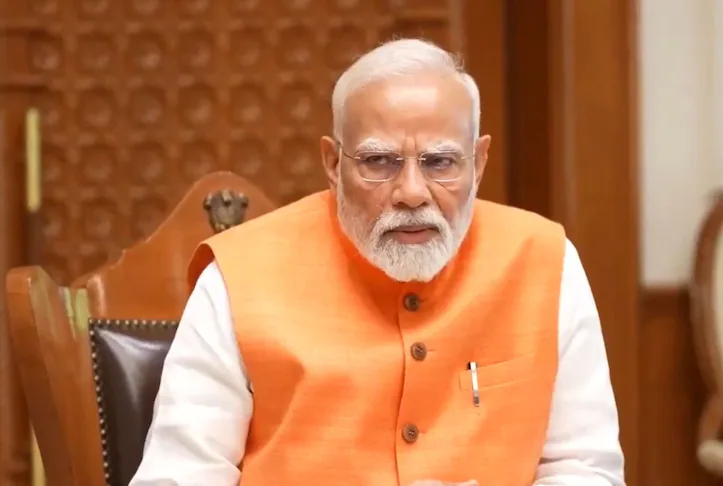
Prime Minister Narendra Modi is set to chair a key meeting of the Cabinet Committee on Political Affairs (CCPA) today, marking the first such gathering since the recent deadly terror attack in Pulwama, Jammu and Kashmir, that claimed the lives of 26 people, most of them tourists.
Often dubbed the “super cabinet,” the CCPA is considered the most powerful among all cabinet panels. It plays a pivotal role in shaping decisions on crucial political and economic issues of national significance.
The meeting follows a high-level review convened by the Prime Minister at his residence in New Delhi on Tuesday, exactly a week after the Pulwama attack. This sequence of events signals the government’s escalating response to the deteriorating security situation in the region.
Historically, the CCPA has met during moments of national crisis. Notably, in February 2019, following the previous Pulwama terror attack, the committee convened to assess the security environment and formulate counter-terror strategies. That meeting preceded the Indian Air Force’s Balakot airstrikes on February 26, 2019.
The current members of the CCPA include:
- Prime Minister Narendra Modi (Chairperson)
- Defence Minister Rajnath Singh
- Home Minister Amit Shah
- Finance Minister Nirmala Sitharaman
- Road Transport Minister Nitin Gadkari
- Commerce Minister Piyush Goyal
In addition to the CCPA session, PM Modi will also lead a meeting of the Cabinet Committee on Security (CCS) at 11 AM today. The CCS is the apex body for decision-making on matters of national security and defense.
This will be the second CCS meeting since the attack. During the first, held shortly after the Pahalgam assault, India announced sweeping measures against Pakistan, including:
- Downgrading diplomatic ties
- Closing key border routes
- Suspending the Indus Waters Treaty
- Expelling Pakistani military attachés from New Delhi
According to government sources, the Prime Minister has granted the Indian Armed Forces “complete operational freedom” to respond to the Pulwama attack, indicating that a significant strategic or military response could be imminent.