The United States has updated its travel advisory for Bangladesh, urging American citizens to reconsider visiting the country due to ongoing threats related to civil unrest, crime, and terrorism. The revised notice, published by the US Department of State on April 18, categorizes Bangladesh under a “Level 3: Reconsider Travel” advisory, while the Chittagong Hill Tracts have been placed under a more severe “Level 4: Do Not Travel” warning.
The Chittagong Hill Tracts—comprising the districts of Khagrachari, Rangamati, and Bandarban—have been identified as especially dangerous. The advisory highlights risks such as communal violence, criminal activity, terrorism, and abductions. According to the notice, “Kidnapping incidents have occurred, some linked to family disputes and others targeting religious minorities. Separatist groups and politically motivated violence also pose risks. There have also been reports of improvised explosive device (IED) attacks and gunfire in the region.”
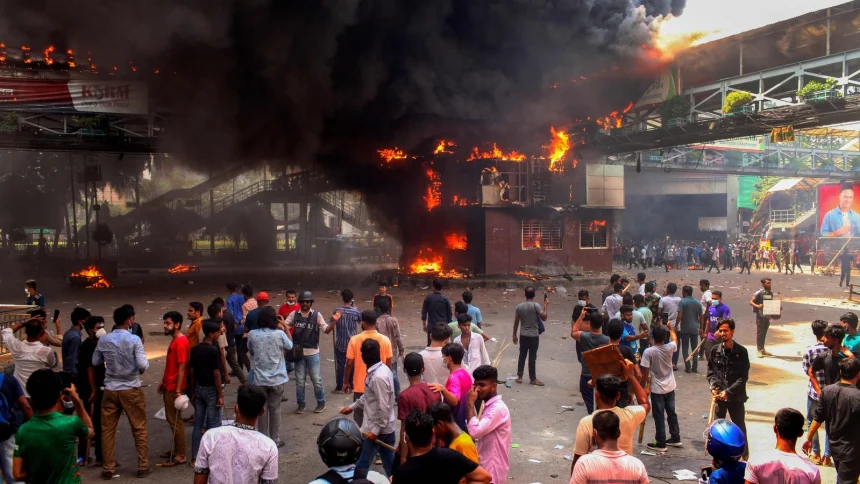
This advisory follows a period of political upheaval in Bangladesh, triggered by the ousting of former Prime Minister Sheikh Hasina in August 2024 after widespread, student-led protests. The unrest, which reportedly claimed over a thousand lives, has been followed by a rise in violence against religious minorities, particularly the Hindu community.
While the situation has stabilized somewhat under an interim administration led by Nobel Peace Prize laureate Muhammad Yunus, the advisory warns that tensions remain high. “Although large-scale clashes have decreased since the interim government took over in mid-2024, sporadic protests still occur and may escalate into violence without warning,” the advisory states.
American citizens are advised to avoid all public gatherings, even those that appear peaceful, as they may quickly turn violent.
The advisory also draws attention to the general security situation in urban areas of Bangladesh, noting the continued threat of terrorism, as well as crimes such as mugging, burglary, assault, and drug-related offenses.
Due to these concerns, US government employees have been restricted from traveling outside Dhaka’s diplomatic enclave unless it is essential. Any movement beyond the capital requires prior authorization. The advisory also notes that the US government’s ability to assist citizens in emergencies, especially outside Dhaka, is limited due to infrastructural and logistical challenges.