Chandigarh: The Defence Research and Development Organisation (DRDO) has successfully carried out a high-speed rocket-sled test of an advanced fighter aircraft escape system, marking a major step forward in aircrew safety and survivability.
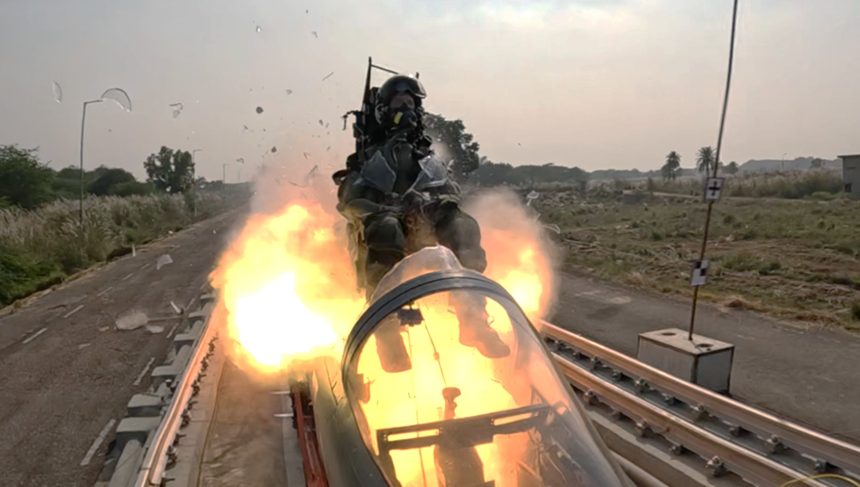
The trial was conducted at the Rail Track Rocket Sled (RTRS) facility of DRDO’s Terminal Ballistics Research Laboratory (TBRL) in Chandigarh. According to officials, the test validated several critical components of the escape mechanism, including canopy severance, ejection sequencing, and complete aircrew recovery.
The canopy severance system—responsible for safely detaching the aircraft canopy before ejection—performed precisely as designed. The ejection seat sequencing, which ensures correct timing and safe propulsion of the pilot away from the aircraft, also met all test parameters.
Experts note that dynamic ejection trials such as this one represent a far more rigorous assessment compared to conventional static tests like the Net test or Zero-Zero test. Unlike static evaluations, dynamic rocket-sled tests simulate real-world, high-speed conditions, providing a more accurate measure of an ejection seat’s performance and the overall reliability of the pilot escape system.
DRDO stated that the success of this test reinforces India’s ongoing efforts to develop and refine indigenous life-saving technologies for military aviation. Further trials are expected as part of the comprehensive qualification process for next-generation fighter aircraft systems.