MOSCOW, Nov 18: India on Tuesday urged the global community to adopt a “zero tolerance” approach towards terrorism in all its forms and manifestations, asserting that there can be no justification, no looking away and “no whitewashing” of the menace.
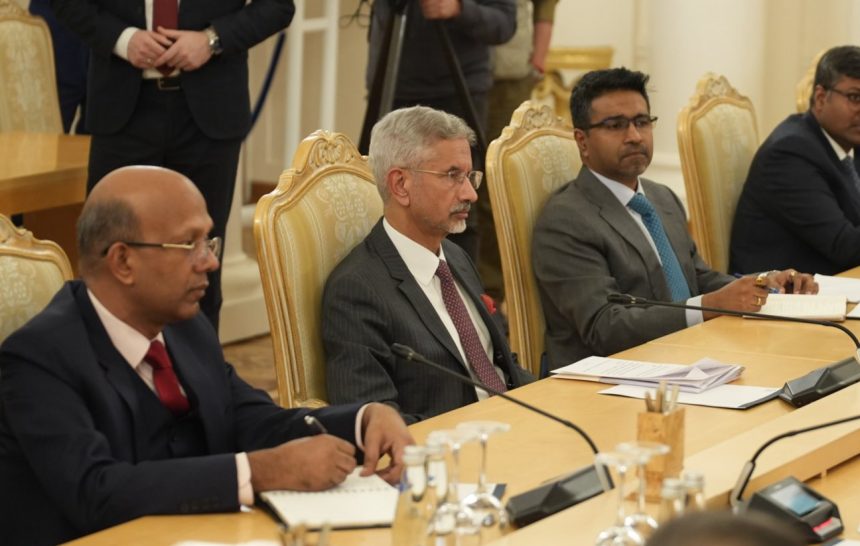
“As India has demonstrated, we have the right to defend our people against terrorism — and we will exercise it,” External Affairs Minister S. Jaishankar said while addressing the Shanghai Cooperation Organisation (SCO) Council of Heads of Government meeting in Moscow.
Jaishankar stressed that the SCO must adapt to the “changing global landscape,” develop an expanded agenda and reform its working methods. “We will contribute positively and fully to these objectives,” he added.
Founded in 2001 in Shanghai, the SCO initially comprised Russia, China, Kazakhstan, Kyrgyzstan, Tajikistan and Uzbekistan. India and Pakistan became permanent members in 2017, while Iran joined in 2023 during a virtual summit hosted by India.
“We must never forget that the SCO was established to combat the three evils of terrorism, separatism and extremism. These threats have only grown more serious over the years,” Jaishankar said.
Reiterating India’s firm stance, he noted, “It is imperative that the world displays zero tolerance towards terrorism in all its forms and manifestations. There can be no justification, no looking away and no whitewashing.”
Turning to economic concerns, the minister said the global economic environment remains “uncertain and volatile,” with supply-side risks compounded by demand-side challenges. This, he said, underscores the urgent need to “de-risk and diversify” by forging extensive and equitable economic partnerships.
“India’s efforts to conclude free trade agreements with many of the countries represented here are especially relevant,” he said, adding that New Delhi’s longstanding ties with SCO members strengthen this endeavour.
Emphasising cultural diplomacy, Jaishankar said people-to-people exchanges are central to any “genuine relationship.” Enhanced interaction among intellectuals, artists, sportspersons and cultural figures within the SCO, he added, would pave the way for deeper mutual understanding.