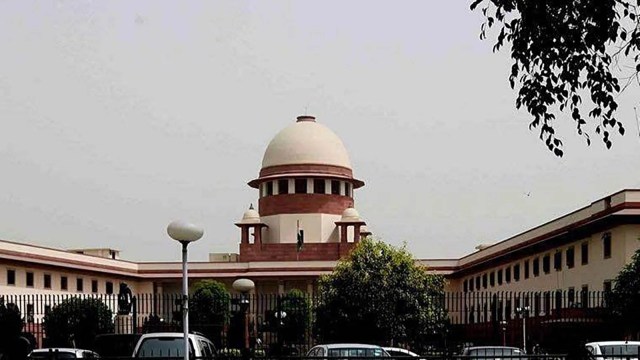
New Delhi, April 16: The Supreme Court is set to take up multiple petitions on Wednesday that contest the constitutional validity of the Waqf (Amendment) Act, 2025. According to the cause list published on the apex court’s website, a bench led by Chief Justice of India Sanjeev Khanna, along with Justices Sanjay Kumar and K.V. Viswanathan, will hear the matter at 2 p.m.
Several petitions have been filed questioning the recent changes made to the Waqf Act, 1995. In response, the central government has filed a caveat, requesting to be heard before any stay is granted on the legislation. A caveat is a legal notice that ensures the court hears a party before issuing any interim order.
Additionally, several BJP-governed states—namely Haryana, Maharashtra, Madhya Pradesh, Rajasthan, Chhattisgarh, Assam, and Uttarakhand—have approached the court in support of the amendment, backing the central government’s position.
Following the passage of the bill by Parliament in early April and its subsequent presidential assent, the Congress party declared its intention to challenge the new law in the Supreme Court. The party claims that the Act threatens the foundational structure of the Constitution and is designed to create religious divisions.
The government, however, argues that the new provisions will uplift millions of underprivileged Muslims and that the law does not infringe upon the rights or properties of any individual or religious community. Minority Affairs Minister Kiren Rijiju has emphasized that the legislation does not interfere with existing waqf properties and aligns with the government’s inclusive development agenda, “Sabka Saath, Sabka Vikas.”
Congress MP and party whip in the Lok Sabha, Mohammad Jawed, filed a petition stating that the amendments breach several constitutional rights, including Article 14 (right to equality), Article 25 (freedom of religion), Article 26 (management of religious affairs), Article 29 (cultural and educational rights), and Article 300A (right to property).
A separate plea by AIMIM chief Asaduddin Owaisi contends that the amendments are “ex facie unconstitutional” and violate Articles 14, 15, 21, 25, 26, 29, 30, and 300A, calling them arbitrary in nature.
Other petitioners include the Association for Protection of Civil Rights, AAP leader Amanatullah Khan, Maulana Arshad Madani of Jamiat Ulema-i-Hind, the All India Muslim Personal Law Board (AIMPLB), the Social Democratic Party of India (SDPI), the Indian Union Muslim League, Taiyyab Khan Salmani, and Anjum Kadari.
The Waqf system, rooted in Islamic law, pertains to endowments made by Muslims for religious or charitable purposes such as mosques, schools, or community services.