Umar Hayat Hussain
Kashmir Shaivism is a profound and transformative non-dual yogic philosophy that emerged in the
serene valley of Kashmir during the 9th century. It offers a spiritual seeker powerful tools for self-
realization and an expansive worldview rooted in divine unity. Remarkably inclusive, it welcomes all
individuals, irrespective of caste, creed, or color, to explore its teachings. This philosophy harmonizes
various schools of thought and tantric systems into a coherent tradition, emphasizing both intellectual
inquiry and experiential understanding.
The fertile valley of Kashmir, a cradle of intellectual and spiritual exploration for millennia, served as the
birthplace of this illustrious tradition. Between the 9th and 12th centuries, Kashmir Shaivism flourished,
giving rise to a lineage of profound thinkers whose works continue to inspire. The foundational text, the
Shiva Sutras, was attributed to Vasugupta in the early 9th century. This was followed by Shivadrishti,
authored by Somananda, and the Ishvara-pratyabhijnakarika by his disciple Utpaladeva. These early
writings set the stage for the philosophy’s later developments.

The 10th and 11th centuries witnessed the towering contributions of Abhinavagupta, arguably the most
celebrated sage-philosopher of Kashmir Shaivism. His works, such as the encyclopedic Tantraloka and
Malinivijayavarttika, brought a systematic coherence to the tradition, weaving together its philosophical,
spiritual, and tantric dimensions. His disciple Ksemaraja carried forward this legacy, authoring the
Pratyabhijnahrdayam, which distilled the essence of Shaivite thought into an accessible format.
Subsequent figures like Maheshwarananda in the 12th century continued this intellectual lineage,
although the tradition gradually receded into obscurity due to political and social upheavals.
Kashmir Shaivism, while sharing the monistic framework of Advaita Vedanta, diverges significantly in its
approach to the world and divine realization. Where Advaita Vedanta views the world as an illusion
(maya), Kashmir Shaivism affirms the reality of multiplicity as a manifestation of Shiva’s divine will
(svatantrya). It posits that the universe, far from being illusory, is the dynamic play of Shiva’s
consciousness, which reflects itself in fleeting, limited forms.
The teachings of Kashmir Shaivism are drawn from 92 Tantras or Agamas, said to be revealed by Lord
Shiva in a divine dialogue with the Goddess. Of these, 64 are monistic, 18 are monistic-cum-dualistic,
and 10 are dualistic. Kashmir Shaivism derives its essence from the Bhairava Tantras, the core of which is
known as Trika Shaivism. The term “Trika” refers to the triad of Shiva (the transcendent reality), Shakti
(the creative energy), and Anu (the individual soul).
Trika philosophy emphasizes the recognition (pratyabhijna) of one’s inherent unity with the divine. This
recognition is not an intellectual exercise but an experiential realization, attainable through the grace of
the Guru, self-inquiry, and spiritual practices such as meditation and mantra recitation.
Over the centuries, the vicissitudes of history—foreign invasions, the decline of Sanskritic learning, and
political turmoil—caused the knowledge of Kashmir Shaivism to fade into obscurity. Many manuscripts
were lost, and its oral tradition became increasingly fragmented. However, the 20th century witnessed a
remarkable revival, largely due to the tireless efforts of Swami Lakshmanjoo, a direct descendant of the
unbroken oral tradition.
Born in 1907 in Srinagar, Swami Lakshmanjoo exhibited profound spiritual tendencies from an early age.
By five, he would become absorbed in inner states of consciousness, which he described as badhi bodha
(“greater than the greatest”). A master of the oral tradition, he possessed an extraordinary memory,
quoting effortlessly from the Shaiva Tantras and elucidating their profound teachings.
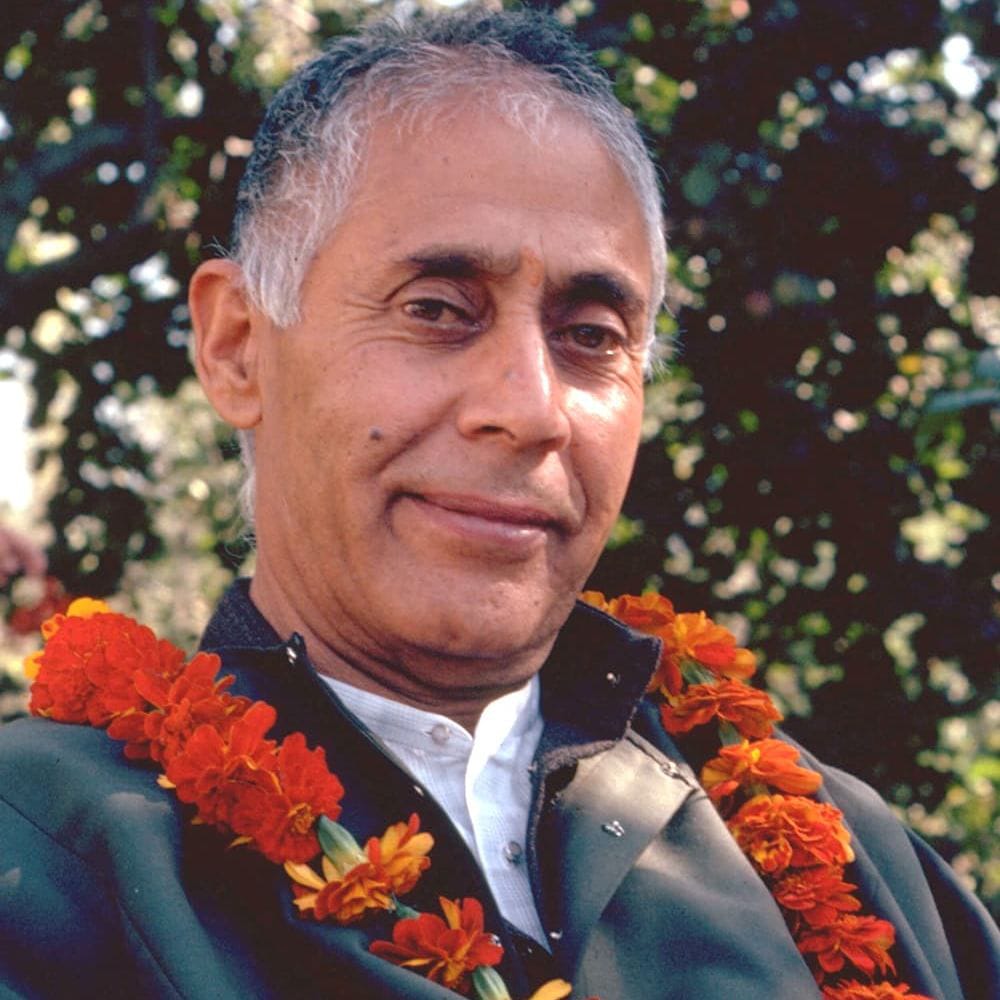
Lakshmanjoo was instrumental in reintroducing Kashmir Shaivism to the modern world. In 1972, he
delivered a series of lectures revealing the essence of Trika philosophy, bridging ancient wisdom with
contemporary understanding. These lectures, later compiled as Kashmir Shaivism: The Secret Supreme,
remain an essential guide to the tradition.
For the last two decades of his life, Swami Lakshmanjoo worked tirelessly to translate pivotal texts of
Kashmir Shaivism into English. His collaboration with John Hughes ensured that these teachings reached
a global audience, inspiring seekers worldwide. As the “doyen of Shaiva Agama,” he is remembered for
his unparalleled contribution to preserving and propagating this sacred tradition.
A cornerstone of Kashmir Shaivism is the transformative power of the Guru. The Guru is not merely a
teacher but an embodiment of divine consciousness, guiding the disciple toward self-realization. Swami
Lakshmanjoo often emphasized this, reiterating that the Guru’s grace is essential for navigating the
spiritual path.
Lal Ded, the 14th-century mystic poetess, eloquently expressed this in her vakhs (aphoristic poems). Her
verses, rich with the essence of Kashmir Shaivism, highlight the Guru’s role in dispelling ignorance:
Zuv chum braman gatse, na zaanum kyah tsor,
Yim navi chhati rozy sahibas soar.
Yi yeli pyali tim saalus toor,
Timi zaani kyah roz raths toor.
(I wandered aimlessly like a blind soul,
Not knowing what the true path was.
But when the Guru’s grace fell upon me,
All the darkness of ignorance vanished.)
Lal Ded, also known as Lalleshwari to Hindus and Lalla Arifa to Muslims, was a towering spiritual figure
who transcended religious boundaries. Her vakhs, numbering around 200, are among the earliest
written records in Kashmiri and serve as a bridge between Kashmiri Shaivism and Sufism.
Her teachings emphasize self-awareness, direct experience of the divine, and liberation from external
rituals. In one of her most famous vakhs, she articulates the essence of non-duality:
Shiv chuy thali thali rozan,
Mo zan hyond ta musalman.
Trukh ay chukh panun paan parzanav,
Soi chuy sahibas satyam zan.
(Shiva is imminent in every place and thing,
Do not discriminate between a Hindu or a Muslim.
If you are wise, recognize your own self,
That alone is the true realization of the Divine.)
(The author can be reached on uhayat7@gmail.com)