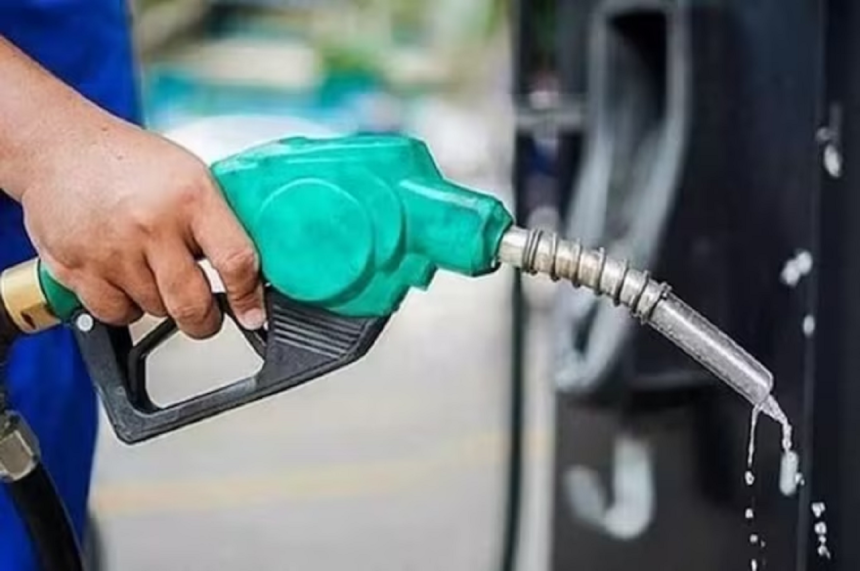
May 19: State-run oil marketing companies on Tuesday raised petrol and diesel prices by around 90 paise per litre, marking the second fuel price hike within a week after nearly four years of frozen retail rates.
In New Delhi, petrol prices increased to Rs 98.64 per litre from Rs 97.77, while diesel rose to Rs 91.58 from Rs 90.67, according to industry sources.
The latest revision follows a Rs 3 per litre increase announced on Friday — the first hike in more than four years — as soaring global crude oil prices, triggered by the Iran conflict, forced state-run fuel retailers to pass on a portion of their mounting losses. Retail prices had remained unchanged for months despite rising international oil rates, largely to shield consumers from inflationary pressures.
Fuel prices vary across states due to differences in value-added tax (VAT).
Earlier this month, compressed natural gas (CNG) prices were also revised upward. On May 15, CNG prices were increased by Rs 2 per kg in cities including Delhi and Mumbai, followed by another hike of Re 1 per kg on Sunday.
Global crude prices have surged by more than 50 per cent since the US-Israeli strikes on Iran on February 28 and Tehran’s retaliatory actions, which disrupted oil flows through the Strait of Hormuz — a crucial route for global energy shipments.
Despite the sharp rise in crude prices, domestic fuel rates had remained frozen at nearly two-year-old levels. The government had maintained that the move was intended to protect consumers from global energy volatility, though opposition parties alleged political considerations ahead of key state elections.
The Rs 3 per litre hike announced last week came shortly after the conclusion of assembly elections, in which the ruling Bharatiya Janata Party (BJP) expanded its political footprint by winning three of five states, including West Bengal.
However, industry sources noted that the increase covered only a fraction of the adjustment needed to align retail fuel prices with rising input costs.
On Monday, Sujata Sharma, Joint Secretary in the Ministry of Petroleum and Natural Gas, said the May 15 revision had reduced oil companies’ losses by nearly 25 per cent, but firms were still incurring daily losses of around Rs 750 crore.
With Tuesday’s hike, petrol and diesel prices have reached their highest levels since May 2022.
Fuel prices had largely remained unchanged since April 2022, except for a one-time reduction of Rs 2 per litre on both petrol and diesel in March 2024 ahead of the Lok Sabha elections.
In Mumbai, petrol now costs Rs 107.59 per litre and diesel Rs 94.08. In Kolkata, petrol is priced at Rs 109.70 and diesel at Rs 96.07, while in Chennai, petrol costs Rs 104.49 and diesel Rs 96.11 per litre.
Industry analysts said the latest increase remains modest compared to the sharp rise in crude oil prices and still leaves retailers absorbing substantial losses.
According to Crisil, oil companies continued to incur losses of around Rs 10 per litre on petrol and Rs 13 per litre on diesel even after the May 15 price revision.
The hikes come despite earlier excise duty cuts announced in March and amid broader government efforts to curb fuel consumption and reduce the country’s oil import burden.
Prime Minister Narendra Modi last week urged citizens to conserve fuel, adopt work-from-home practices where possible, and reduce unnecessary travel as elevated energy prices continue to strain India’s foreign exchange reserves and widen the current account deficit.
Several state governments have also instructed departments to limit official travel, avoid physical meetings, and operate with reduced staffing.
Private fuel retailers had already revised their rates upward. Nayara Energy raised petrol prices by Rs 5 per litre and diesel by Rs 3 in March, while Shell increased petrol prices by Rs 7.41 and diesel by Rs 25 per litre from April 1. In Bengaluru, Shell currently sells petrol at Rs 119.85 per litre and diesel at Rs 123.52.
Domestic LPG cylinder prices were also increased by Rs 60 in March, although industry sources said prices still remain below actual market costs. Oil marketing companies are reportedly losing around Rs 674 on every 14.2-kg LPG cylinder sold.
Industry sources described the latest fuel price increase as a calibrated move aimed at easing pressure on oil companies without triggering a major inflationary shock. However, analysts cautioned that the rise is still expected to contribute to inflationary pressures.
India’s retail inflation, measured by the Consumer Price Index (CPI), rose to 3.48 per cent in April 2026 from 3.40 per cent in March. Meanwhile, wholesale price inflation (WPI) surged to 8.3 per cent — a 42-month high — driven largely by escalating fuel and energy costs amid elevated global crude prices.