PTI
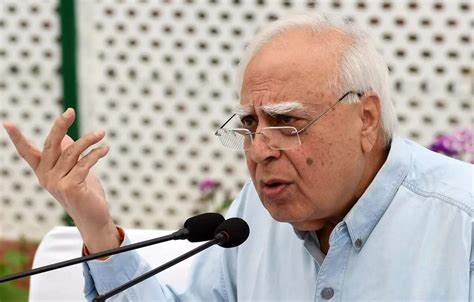
New Delhi, April 25: On Friday, Rajya Sabha MP Kapil Sibal urged Prime Minister Narendra Modi to call for a special session of Parliament to condemn the recent Pahalgam terror attack and send a unified message to the world that India stands together against such acts of violence.
Sibal also recommended that the government send delegations consisting of both ruling and Opposition MPs to key countries to apply diplomatic pressure on Pakistan. In a press conference, the former Union minister suggested that India could adopt measures similar to those of the United States in imposing sanctions by advising countries with trade relations with Pakistan that they would be excluded from India’s market if they continue their dealings with Islamabad.
Referring to a statement made by Zulfikar Ali Bhutto in 1972, where he declared, “we will bleed India with a thousand cuts,” Sibal recalled numerous terror attacks on India over the years, including the 2001 Parliament attack, the Kaluchak massacre, the 2005 Indian Institute of Science attack, the 2008 Mumbai attacks, and the 2019 Pulwama bombing, among others. He pointed out that these incidents reflect a consistent pattern of cross-border terrorism from Pakistan.
Sibal suggested that the Prime Minister should call for a special session of Parliament to discuss the matter, asserting that the country is united in its resolve to combat terrorism. He emphasized that the Opposition is fully supportive, as the attack was an assault on India’s sovereignty. He also stressed the need for a unanimous resolution in Parliament to send a clear message to the world that India is united and will not tolerate such acts of terror.
The former Congress leader reiterated that a terrorist is a terrorist, regardless of their religion, and condemned Pakistan for using terrorism as a means to achieve its political objectives, particularly in maintaining its military power.
Sibal also proposed that the government send MPs to countries such as the United States, European nations, China, Japan, Australia, and others to create diplomatic pressure against Pakistan. He called for India to inform these nations that trading with Pakistan would lead to exclusion from the Indian market, drawing a comparison to the way the US handles such matters.
Highlighting the role of the United Nations, Sibal suggested that India should seek a resolution in the UN Security Council to create global pressure against Pakistan. He pointed out that it would be crucial to observe whether China supports the resolution or aligns with Pakistan.
In the proposed resolution, Sibal stressed the importance of sending a strong message against those who politicize terrorism. He criticized certain statements made in the media and within political circles that seemed to align with Pakistan’s narrative, urging that political capital should not be made from the loss of innocent lives.
Sibal also took issue with Prime Minister Modi’s absence from the all-party meeting convened to discuss the Pahalgam attack. He expressed his disappointment, noting that the Prime Minister’s participation would have been more appropriate, despite his priorities elsewhere.
Leaders from across party lines at the all-party meeting pledged to support decisive actions against terrorism and terror camps. However, some opposition parties raised concerns about security lapses in Pahalgam, where terrorists killed 26 individuals. The government reassured leaders that it was taking all necessary steps to enhance security and combat terrorism.